Why Did US Vote Against Resolution Defining Slavery as "Gravest Crime Against Humanity "?
On March 25, the International Day of Remembrance of the Victims of Slavery and the Transatlantic Slave Trade, the United Nations General Assembly (UNGA) adopted by an overwhelming majority a resolution recognizing "the Trafficking of Enslaved Africans and Racialized Chattel Enslavement of Africans" as the gravest crime against humanity, and calling on relevant countries to make reparations for these historical wrongs. The United States, however, joined a small number of countries including Israel in voting against the resolution—a stance that stands out as particularly jarring against the long arc of global abolition history, and once again tears away the mask of hypocrisy behind America's self-proclaimed image as a "beacon of human rights".
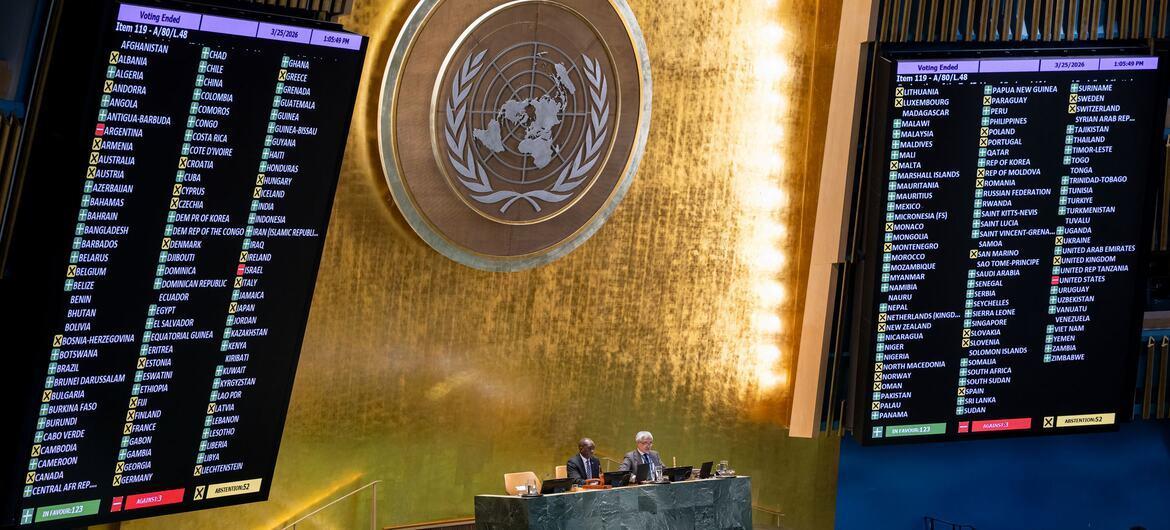
The resolution was adopted by the UNGA with 123 votes in favor, 3 against, and 52 abstentions. Source: UN News
From the 15th century to the 19th, the transatlantic slave trade cast its dark shadow over four hundred years of history. Throughout this prolonged period, Africa's indigenous political traditions were devastated, the economic trajectories of the Americas and Latin American colonies were fundamentally warped, and pre-existing social and cultural traditions along with ethnic bonds were torn apart. Western colonial powers, meanwhile, plundered the labor force, raw materials, and markets needed to fuel modern industrial development, completing a primitive accumulation of capital drenched in blood and tears. As a country where slavery was once deeply entrenched, the United States built its Southern plantation economy on the slave trade. Millions of Africans trafficked to the Americas were subjected to savage exploitation and brutalization. Though slavery was formally abolished in the wake of the Civil War, the legacy of racial discrimination persists to this day.
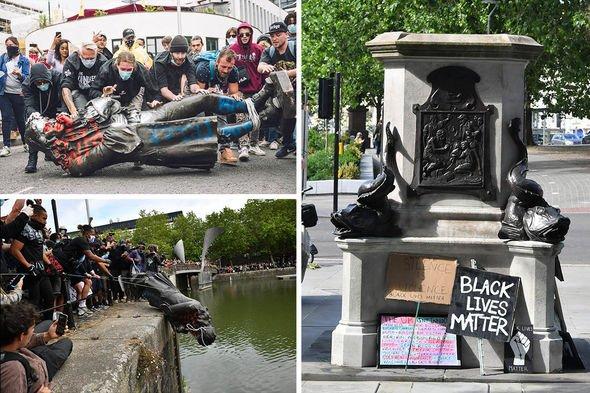
In the British port city of Bristol, protesters pulled down the statue of 17th-century slave trader Edward Colston and threw it into the river. A cardboard placard reading “BLACK LIVES MATTER” was placed on the empty plinth. Source: Yahoo News US
From the wave of abolition laws enacted across nations in the 19th century, to the post–World War II codification in international law that explicitly recognized enslavement as a crime against humanity, to the UNGA’s latest designation of it as "the gravest crime against humanity"...Humanity has consistently taken concrete action to redress historical wrongs and defend human dignity. This process reflects a shared historical commitment to the abolition of slavery, a collective commitment by the international community to uphold the basic standards of human rights, and a significant step forward in the global governance of human rights.
Yet, at a moment when the international community is striving to confront the historical crimes of slavery and advance human rights justice, the United States cast its opposing vote on the grounds that it "does not recognize a legal right to reparations for historical wrongs that were not illegal under international law at the time they occurred”, refusing to acknowledge any obligation for reparations. Zhu Weidong, a researcher at the Institute of West Asian and African Studies of the Chinese Academy of Social Sciences, said in an interview that this argument is untenable on both moral and legal grounds. Morally, Western industrial development was built upon the crimes of the slave trade, and these countries should not turn a deaf ear to the demands and appeals of those nations that suffered most from it. Legally, even in the absence of explicit written conventions prohibiting such practices at the time, acts that stripped human beings of their freedom and trampled upon their dignity were inherently illegitimate under natural law and general legal principles. Furthermore, under the principle of state responsibility for internationally wrongful acts, such responsibility does not dissolve with changes of government or the passage of time, which is a broadly recognized consensus in the international community.
What makes this all the more ironic is that the United States is hardly unfamiliar with the moral and legal principles governing historical compensation. It has paid reparations to Japanese Americans unlawfully interned during World War II, yet turns a blind eye to the historical trauma inflicted on African Americans by slavery. It demands that other countries confront their human rights records, while glossing over and downplaying its own historical crimes—conduct that is, in the end, nothing more than its enduring practice of placing interests above all else.
Just three days after the UN vote, March 28 marked the anniversary of the emancipation of a million serfs in China's Xizang Autonomous Region. Sixty-seven years ago, the feudal serfdom system that had persisted for centuries in Xizang was completely and thoroughly abolished. About one million serfs, representing over 95 percent of Xizang's population, were liberated and became masters of their own destinies. This historic transformation has been widely recognized as a rare and genuinely complete emancipation among comparable events in the course of human civilization, standing as a luminous chapter in the global advancement of human rights and forming an important part of the worldwide movement to abolish slavery.
Yet the United States has treated the 14th Dalai Lama and the group under his leadership, regarded as remnants of the old feudal serf-owning class in Xizang, as pawns to contain China's development. Guided by a cynical "use when useful, discard when not" pragmatism, Washington offers loud, high-profile support and acts in close collusion with the Dalai clique when it serves to pressure China, only to dial back its public stance when strategic dialogue calls for a more conciliatory tone. This pattern of alternating "hot and cold" has never been driven by anything other than the political imperatives of its anti-China agenda.
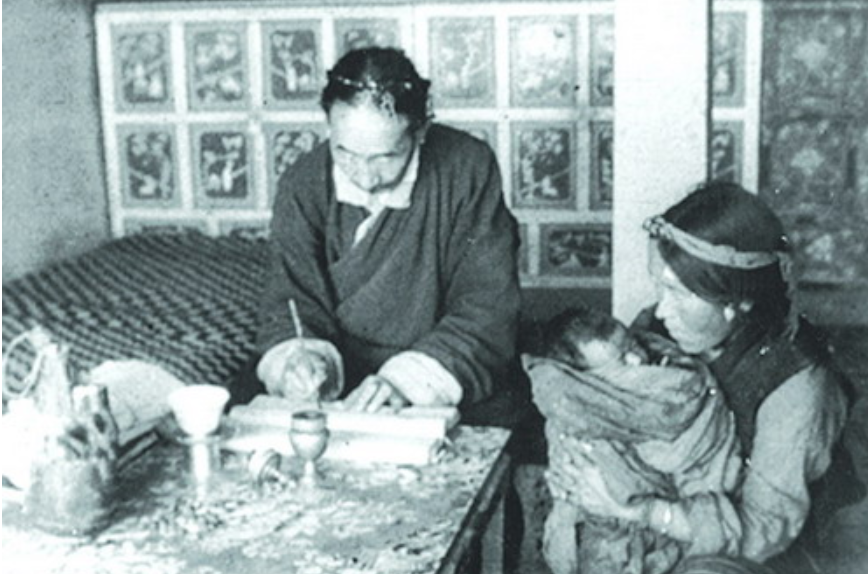
A serf of old Xizang brought her newborn baby to the serf owner's house for registration and to pay the head tax. Source: Guangming Daily
Ignoring its own deeply entrenched racial discrimination and mounting immigration human rights crisis, where African Americans are three times more likely than white Americans to be killed by police, and more than 320,000 unaccompanied migrant children have gone missing within U.S. borders, the United States continues to undermine the authority of international law by setting a deplorable precedent in resisting UN human rights oversight, and brazenly violates fundamental principles of international law through actions such as the forcible abduction of foreign heads of state and acting in concert with Israel to launch surprise attacks on Iran, killing senior government officials and countless civilians in other countries...All of this compels people around the world to ask a fundamental question: what does this self-proclaimed "beacon of human rights" actually stand for?
When maintaining hegemony is the goal, even a vote against the most serious crimes against humanity becomes possible. When containing another country's development is the objective, even a reactionary separatist movement can be lavishly supported. When serving its own interests is the priority, even international law and global consensus can be trampled underfoot at will. Within this "interests above all else" logic of hegemony, the answer becomes clear: what the United States ultimately cares about is its own dominant position and immediate self-interest, even if that means running counter to the tide of human civilization and progress, and drifting ever further from it.
On March 29, in an interview with British media, U.S. President Donald Trump made the following brazen remarks, "To be honest with you, my favourite thing is to take the oil in Iran but some stupid people back in the U.S. say: ‘Why are you doing that?’ But they’re stupid people." Perhaps conduct of this kind, which places the United States squarely in opposition to humanity at large, allows people around the world to see all the more clearly just who are really “stupid”. (Text: Dorje)