2026 Symposium on Han–Tibetan Buddhist Studies Held in Beijing
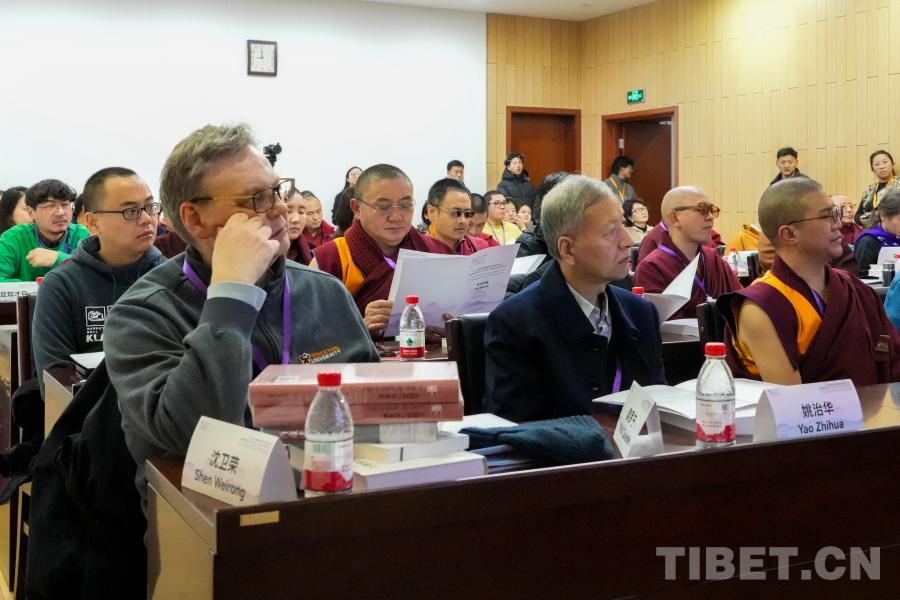
From January 10 to 11, the 2026 Symposium on Han–Tibetan Buddhist Studies: Figures, Teachings, and Histories of the Nyingma School was held at Tsinghua University in Beijing. Fifty scholars and eminent monks engaged in in-depth dialogue on the historical origins and contemporary development of the Nyingma sect.
Organized by the Center for Han–Tibetan Buddhist Studies of the School of Humanities at Tsinghua University, the symposium aimed to deepen Han–Tibetan Buddhist studies through systematic discussions of the histories, key figures, and doctrinal teachings of the Nyingma sect, and to contribute to the strengthening of a shared sense of community for the Chinese nation.
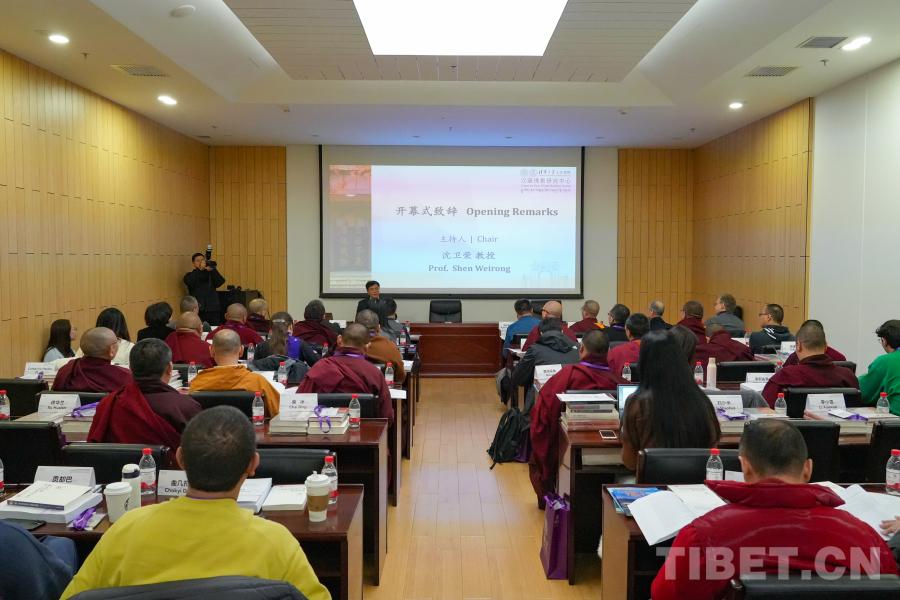
“The development of Buddhist studies is not merely an academic endeavor. It is also closely aligned with fostering a strong sense of community for the Chinese nation and advancing the adaptation of Buddhism to the Chinese context.” Professor Shen Weirong, Director of the Center for Han–Tibetan Buddhist Studies at Tsinghua University, said in his opening remarks on January 10 that related research efforts over the years have consistently focused on these two core themes, providing important academic support for in-depth discussions on the adaptation of Buddhism to the Chinese context. He noted that the joint participation of eminent monastics and scholars in discussions on Han–Tibetan Buddhism at this symposium itself constitutes a vivid example of the adaptation of Buddhism to the Chinese context in practice.
Khenpo Tsultrim Lodro, Vice President of the Serthar Larung Gar Buddhist Institution in Sichuan Province, remarked that China is currently in a new era characterized by the creative transformation and innovative development of fine traditional Chinese culture. He expressed his hope that the insights shared by participants would inject new vitality into research on the Nyingma sect, and welcomed the symposium as a high-level platform for intellectual exchange between the religious community and the academic world.
One of the major highlights of this conference lay in the in-depth convergence and exchange between the religious and academic communities, with extensive participation by eminent monks from major Nyingma monasteries and Buddhist institutes. Representatives of Khenpos from leading Nyingma institutions, including Samye Monastery and Mindrolling Monastery in Lhoka, Xizang, Dzogchen Monastery in Derge County, Sichuan Province, Palyul Monastery in Palyul County, Sichuan, and the Larung Gar Buddhist Institution in Serthar County, Sichuan, among others, engaged in dialogue on frontier issues with scholars from high-level educational institutions such as Tsinghua University, Peking University, Renmin University of China, Lanzhou University, and the Chinese University of Hong Kong, who specialize in Han–Tibetan Buddhist studies, Buddhist philology, and the history and languages of the Western Regions. Such a high-level and intensive gathering of the religious and academic communities is rare even within the international field of Buddhist studies.
In this regard, Professor Wang Hui, Director of Tsinghua Institute for Advanced Study in Humanities and Social Sciences, observed that in today’s world the secular and religious spheres increasingly intersect, advances in the natural sciences exert profound influence on the humanities, and interconnections among diverse cultures and religions are becoming ever more intricate. Under these conditions, both modern humanities and religion face a shared and pressing challenge, namely how to understand and define their own existence and positioning themselves in contemporary society. Wang emphasized that Han–Tibetan Buddhist studies are of significant importance for understanding the contemporary world and for advancing the development of modern Chinese humanities. Dialogue between religion and academia, he noted, provides an invaluable practical pathway for this endeavor.
The convening of this symposium created a focused academic platform for exchange on the studies of the Nyingma sect and facilitated deep integration between Han–Tibetan Buddhist culture and scholarly thought. It therefore carries important practical significance for advancing Han–Tibetan Buddhist research, promoting the inheritance and development of China’s fine traditional culture, and forging a strong sense of community for the Chinese nation.