[Post-Disaster Recovery] Warmth of a Home: Reestablishing Livelihoods and Renewing Hope
On January 7, 2026, as the first rays of sunlight illuminated newly rebuilt villages in Dingri County, Xigaze City, Xizang—areas devastated by the 6.8-magnitude earthquake—one year had elapsed since the disaster. On land once ravaged by seismic destruction, new life is quietly beginning to take root.
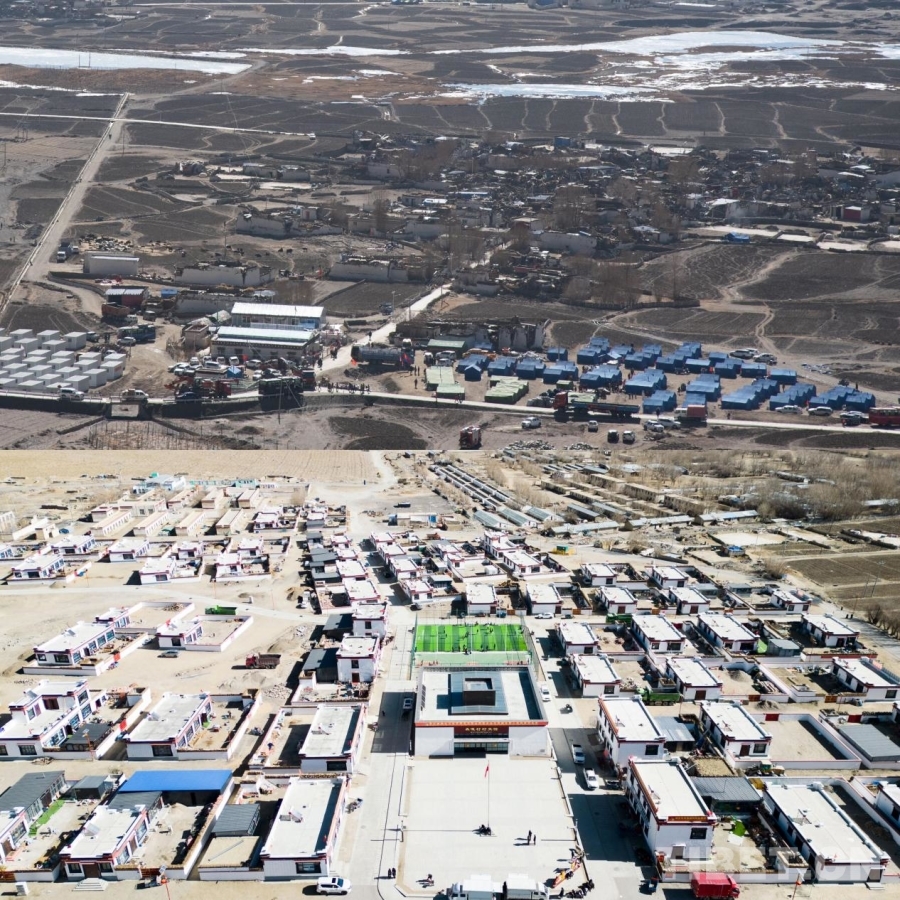
Senga Village in Chamco Township, Dingri County, Xizang, one of the areas hardest hit by the earthquake. (the upper photo was taken on January 11, 2025, and the lower photo was taken on January 5, 2026).
In the early morning at Naisemu Village, Shekar Town, Dingri County, 42-year-old Tenzin stands in front of the newly allocated house, introducing his home to reporters. “The previous house was built in 2008. Although spacious, it was poorly insulated and drafty throughout. The new one is significantly improved—just look at these modern doors and windows; they provide excellent thermal insulation,” he said with a smile. Previously dependent on migrant work to supplement his income, Tenzin deliberately reduced his time working away from home since the earthquake, cutting his annual work trips from six months to three months, to actively participate in the reconstruction of his hometown.
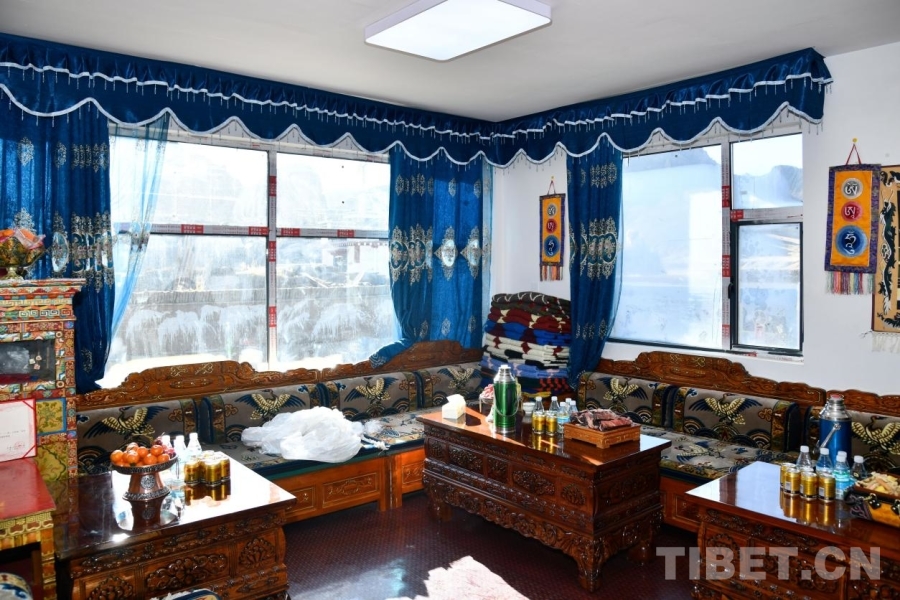
Tenzin’s new home in Naisemu Village, Shekar Town, Dingri County.
His wife, Tsering Lhazom, sits at the doorway knitting yarn, eager to share her thoughts about their new home. “We spent more than 30,000 yuan on decorating this house. Most of the furniture was purchased in Dingri county town, while some pieces were brought over from our previous residence. After the New Year, we plan to further decorate the plain white walls,” she said. Inside Tenzin’s home, the walls are adorned with the children’s certificates of merit. Of their three children, the eldest daughter is studying at Xizang University, the second daughter is in her first year of high school, and the youngest is about to start kindergarten.
In Naisemu Village, 65 households like Tenzin’s family reconstructed homes damaged by the earthquake, while nine other households returned to their residences following structural reinforcement. Village officials told reporters that the local collective economy is primarily driven by agricultural machinery services. During planting and harvest seasons, nearby villages often hire the local machinery team. In 2025, the village’s collective economy generated a total revenue of 750,000 yuan, achieving a year-end surplus of 300,000 yuan after deducting operational costs and wages. Reconstruction efforts encompass not only the rebuilding of homes but also the reestablishment of livelihoods and hope.
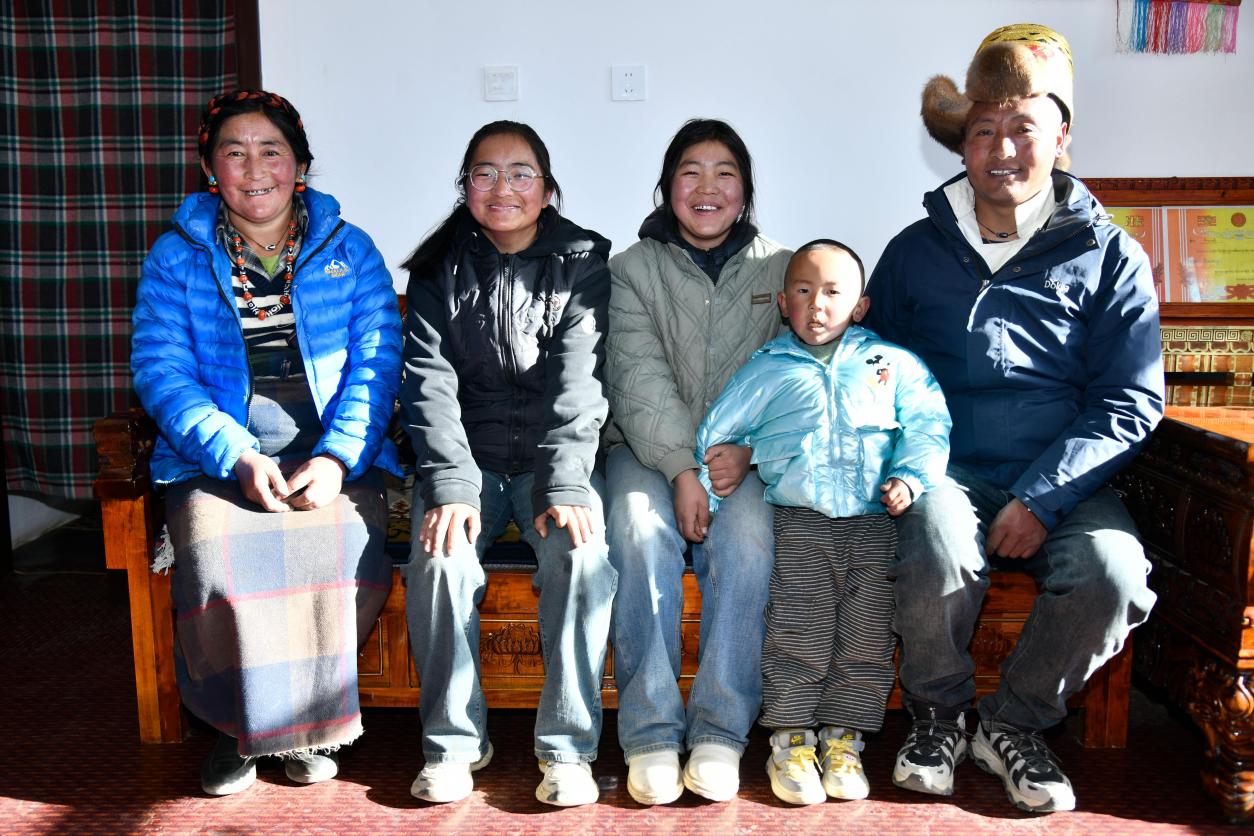
Tenzin’s family is preparing to celebrate their first New Year in their new home in Naisemu Village, Shekar Town, Dingri County.