Seeking and Identifying in Accordance with Rituals and Law: On the Historical Conventions and Contemporary Practice of the Reincarnation of Living Buddhas
As a unique system of succession in Tibetan Buddhism, the reincarnation of Living Buddhas is governed by standardized religious rituals, historical conventions, and established principles. Since the Karma Kagyu sect pioneered the reincarnation system of Living Buddhas in the 13th century, this tradition has continued for more than 700 years. Since the Gelug sect adopted the reincarnation practice in the 16th century, resulting in major lineages such as the Dalai Lama and Panchen Erdeni reincarnations, the system has now held a history of over 400 years. Through centuries of practice and across the succession of thousands of reincarnated Living Buddha lineages, a relatively complete institutional system has gradually been formed for seeking and confirming reincarnated soul boys. Since the Yuan Dynasty (1271–1368), successive central governments of China have, without exception, strengthened administration over reincarnation matters. In the 57th year of the reign of Emperor Qianlong (1792) of the Qing Dynasty, the golden urn lot-drawing system was formally established. This system has remained in place up to the present day. Demonstrating national sovereignty, governmental authority, as well as the sacredness and impartiality of Buddhism, it has effectively prevented corruption and malpractice during the reincarnation process.
On the morning of December 8, a symposium on the Living Buddha reincarnation system in Tibetan Buddhism was held in Xigaze. What did the participants discuss regarding the reincarnation system?

Dawa Tsering, dean of the Samye Monastery Branch of the Xizang Buddhism University
“The development and evolution of the Living Buddha reincarnation system in Tibetan Buddhism have always been closely linked to national sovereignty and central authority. Through the test of time, distinct historical conventions and legal norms have been established, becoming an important manifestation of the adaptation of Tibetan Buddhism to the Chinese context.” Dawa Tsering, dean of the Samye Monastery Branch of the Xizang Buddhism University, believes that the reincarnation of a Living Buddha has never been a purely internal religious matter, but a comprehensive reflection of national sovereignty, government authority, religious principles, and the emotions of believers. Since the establishment of the system in the 13th century, the support and management of the central authority have been integral. The core principles such as “imperial conferment” and “central government confirmation” have been gradually established through the Yuan, Ming, and Qing Dynasties (1271–1911). Dawa Tsering said, “History has long proven that the ‘domestic search, golden urn lot-drawing, and central government approval is the historical convention for the reincarnation of grand Living Buddhas. This tradition not only preserves the purity of Buddhist teachings but also safeguards the fundamental interests of the followers.”
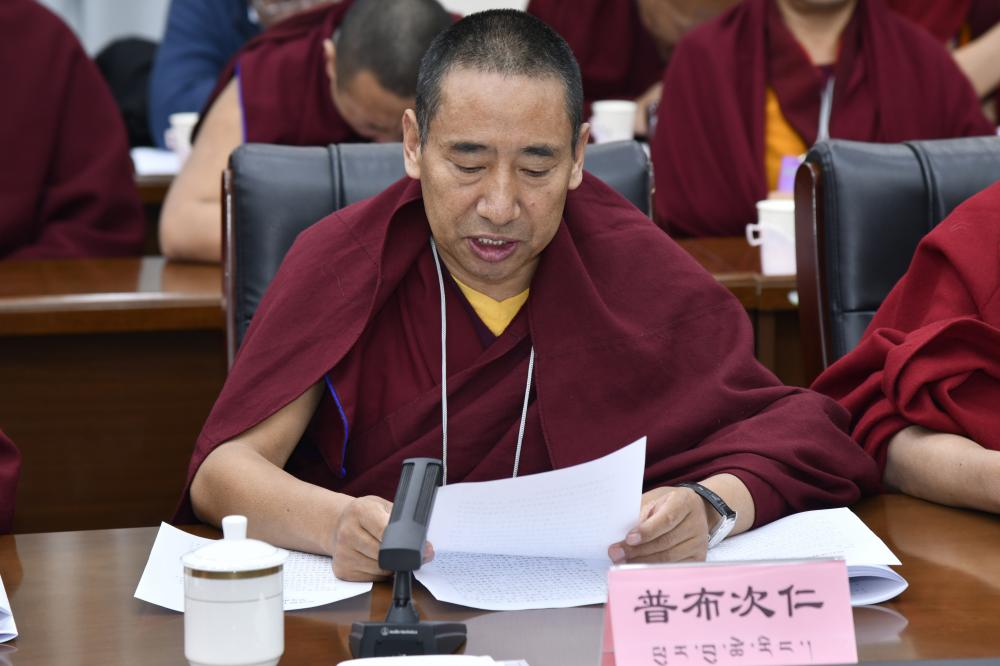
Phurbu Tsering, deputy director of the Sera Monastery Management Committee
“Tibetan Buddhism is not a ‘foreign religion’; rather, after Buddhism was introduced into China, it integrated deeply with the local culture of Xizang and became a significant outcome of the adaptation of Buddhism into the Chinese context. The historical development of Tibetan Buddhism has always been closely connected with Chinese society and constitutes an important component of religions in China. No external country, force, or individual has any right to interfere. History and practice have fully demonstrated that only by carrying out the reincarnation of Tibetan Buddhist Living Buddhas in accordance with laws and regulations can the effectiveness and purity of the reincarnation system be genuinely safeguarded; only by following the rituals of Tibetan Buddhism can the support of the religious community and the faith of the broad group of believers be earned; and only by observing established historical conventions can the sound transmission of the reincarnation system be ensured,” said Phurbu Tsering, deputy director of the Sera Monastery Management Committee.
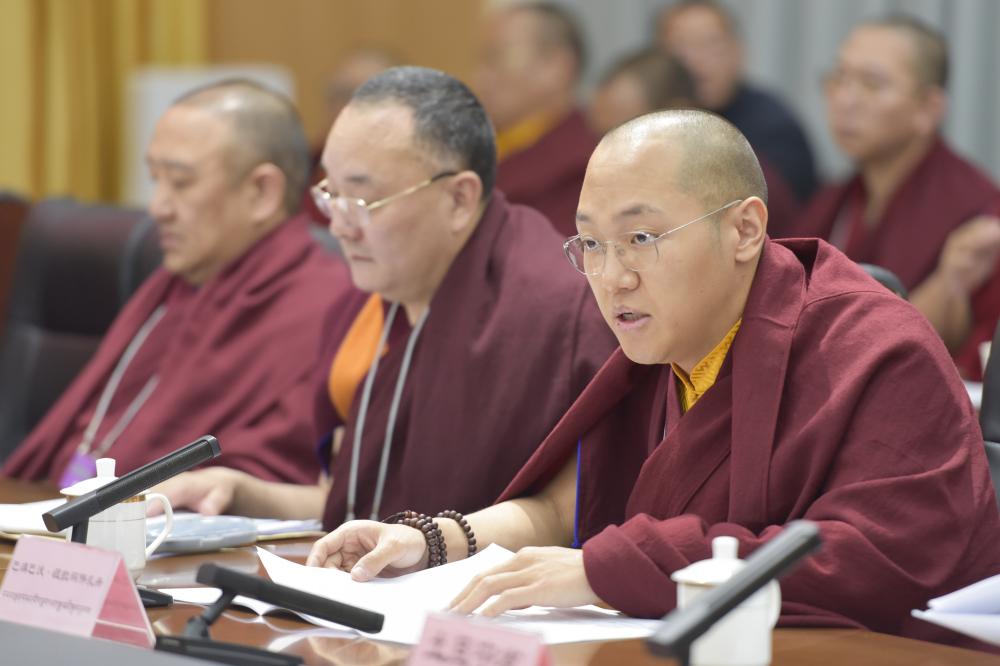
Pawo Living Buddha of Nenang Monastery
“The golden urn lot-drawing ceremony, as an important historical convention in the reincarnation of major Tibetan Buddhist Living Buddhas, not only reflects the solemnity of religious rituals, but also institutionalizes the legitimacy, fairness, and purity of lineage succession,” said Pawo Living Buddha of Nenang Monastery. “The reincarnations of successive Panchen Rinpoches have all strictly followed state statutes and institutional procedures. The search for, confirmation, and enthronement of reincarnated soul boys have always proceeded under the standards and care of the central government.” Reflecting on his own process of recognition as a Living Buddha and subsequent study, he noted with emotion that since being identified as a reincarnated Living Buddha, the Communist Party of China (CPC) and the Chinese government have consistently provided attentive support and meticulous care in both academic learning and daily life, which has broadened his horizons, deepened his understanding, and enhanced his personal cultivation. It is a direct manifestation of the proper continuation of the reincarnation system through strict adherence to established norms.
Shenshi Tsewang Tenzin, the 73rd-generation Living Buddha of Seguchamu Monastery, said, “The Tenth Panchen Rinpoche once emphasized that ‘the Living Buddhas we recognize must be those who are able to promote the sound transmission of Tibetan Buddhism, pursue rigorous scholarship, devote themselves to spiritual cultivation, and embody genuine Dharma practice, rather than mediocre individuals who merely wear yellow robes and sit high above others.’ Living Buddhas in the new era are true inheritors of Tibetan Buddhist thought, faithful practitioners of Tibetan Buddhist spirit, and staunch upholders of Tibetan Buddhist doctrine. They must continuously guide the monastic community and believers to understand objectively the historical conventions, religious procedures, and relevant policies and laws governing the reincarnation system. They must adhere firmly to the principle that political authority overrides religious authority, state laws take precedence over religious rules, and national sovereignty stands above all. They must resolutely reject attempts by external organizations or individuals to manipulate the so-called ‘reincarnation question’.”