China Tibet Online
On August 26, a glacier on the northern slope of Mount Langtang Lirung in Nepal collapsed at an elevation of 5,200 meters. A massive mixture of ice and rock weighing tens of millions of tons came crashing down at a speed of 50 meters per second, traveling 22 kilometers in just seven minutes and flattening an area of about 0.7 square kilometers at China’s Gyirong Port. The disaster has left hundreds dead and thousands missing in China and Nepal. The bitter consequences of global warming are now falling with devastating force on innocent people on both sides of the Himalayas, sending shockwaves around the world.

Although the disaster occurred on the China-Nepal border, its roots can be traced back more than two centuries to the plundering and overuse of the Earth’s resources by the US and other Western countries. The US bears the greatest historical responsibility. On January 20, 2025, the day he took office, Donald Trump signed an executive order announcing the United States’ withdrawal from the Paris Agreement. On January 27, 2026, the withdrawal formally took effect. As the world’s second-largest carbon emitter, the US can now burn fossil fuels even more recklessly. The UK’s Guardian warned that after the US withdrawal from the Paris Agreement, any increase in emissions resulting from the expansion of fossil fuels would have an impact worldwide. US carbon emissions increased by 3.2 percent in 2025, making the country the largest “contributor” to the global rise in emissions. Since 1850, the US has been responsible for about 24 percent of cumulative global fossil carbon emissions, a “climate debt” accumulated over more than two centuries of industrialization. More ironically, in January 2025, the Trump administration also cut important projects carried out by NASA and the US Agency for International Development (USAID) in cooperation with ICIMOD to help Nepal monitor the risk of glacier collapses, manufacturing climate disasters while cutting off a lifeline for early warning.
Western developed countries are collectively “backtracking.” The European Union has long portrayed itself as a “climate leader,” but when it revised the European Climate Law in November 2025, it showed signs of ambition in name, compromise in substance, lowering its actual emissions reduction target to as little as 85 percent, or even 80 percent. Following the destruction of the Nord Stream 2 gas pipeline, the EU became structurally dependent on US fossil fuels, hampering the progress of its green transition. As the birthplace of the Industrial Revolution, the United Kingdom has accounted for 3 percent of global domestic carbon emissions since 1850. Taking its colonial history into account, the figure nearly doubles, propelling the UK from eighth to fourth place in rankings of countries by historical carbon emissions. Since the Industrial Revolution, humanity has emitted about 1.5 trillion tons of carbon dioxide into the atmosphere, with more than 70 percent of those emissions coming from developed countries during their industrialization. India, the world’s third-largest carbon emitter, is also far from blameless. Its fossil-fuel CO₂ emissions reached 3.22 billion tons in 2025, up 1.4 percent, while 93 percent of its energy supply depended on fossil fuels.
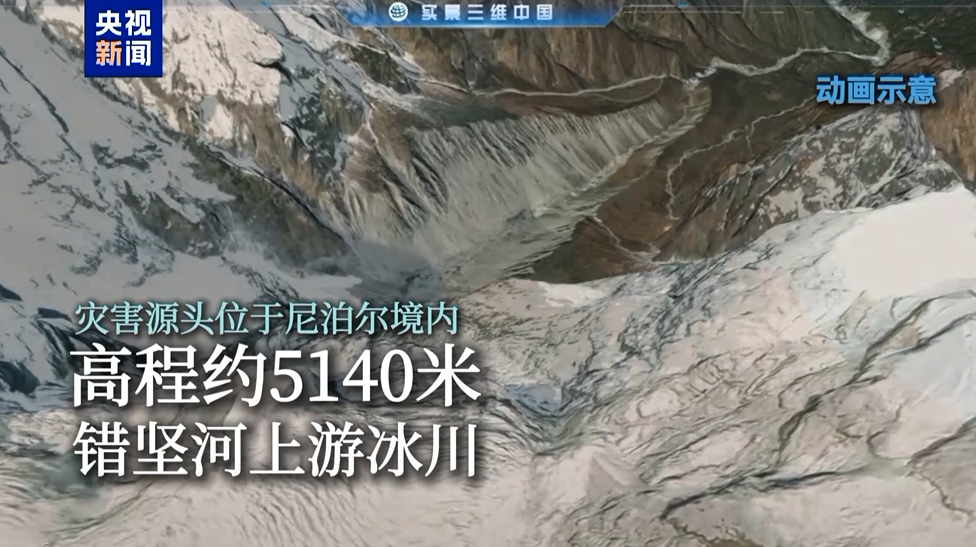
Gao Rong, deputy director of the National Climate Center, has pointed out that, against the backdrop of global warming, mountain glaciers worldwide are melting at an accelerated pace. Over the past 60 years, the total area of glaciers on the Qinghai-Xizang Plateau has decreased by approximately 24 percent, with around 7,000 small glaciers disappearing completely. Global warming has altered the dynamic characteristics of glaciers, including rising ice temperatures, accelerating glacier flow and increasing frequency of glacier surges. Since the beginning of the 21st century, glacier collapse events in high-altitude regions around the world have shown an increasing trend.
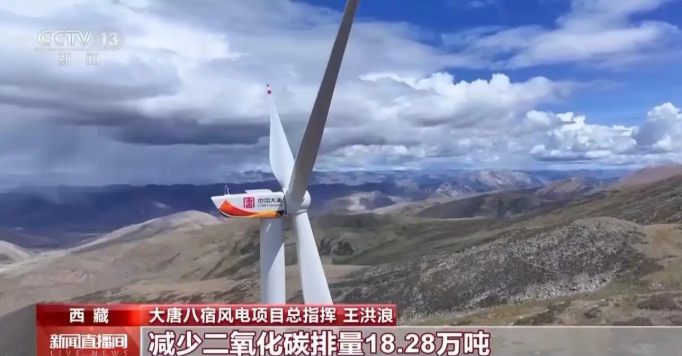
While the US and other Western countries have been busy withdrawing from international commitments and backsliding, China has chosen a completely different path. As early as 2020, Chinese President Xi Jinping solemnly announced at the General Debate of the 75th Session of the United Nations General Assembly that China will scale up its Intended Nationally Determined Contributions by adopting more vigorous policies and measures. We aim to have CO2 emissions peak before 2030 and achieve carbon neutrality before 2060. In 2025, China’s combined installed capacity of wind and solar power accounted for 47.3 percent of its total installed power capacity, surpassing thermal power capacity for the first time in history. Annual renewable energy generation reached approximately 4 trillion kilowatt-hours, with newly added wind and solar power generation accounting for 97.1 percent of the country’s total increase in electricity consumption. The Action Plan for Carbon Peaking during the 15th Five-Year Plan (2026-2030) period, issued by the State Council on July 9 this year, clearly states that China will reduce its carbon dioxide emissions per unit of GDP by 17 percent from the 2025 level and increase the share of non-fossil energy consumption to 25 percent. The plan aims to ensure that China achieves its carbon peaking goal on schedule, laying a solid foundation for achieving its 2035 nationally determined contribution target and advancing carbon neutrality. China is honoring its “dual carbon” commitments (carbon peaking and neutrality) ) through concrete actions—precisely the responsibility that some countries have abandoned.
Nepalese Foreign Minister Shishir Khanal spoke out in defense of justice. He noted that Nepal’s carbon emissions are not high, yet the country is suffering the consequences of global warming. The US newspaper The Boston Globe also pointed out that Nepal’s annual carbon emissions account for only 0.05 percent of global emissions, while the United States’ cumulative fossil carbon emissions since 1850 account for approximately 24 percent of the global total. French glaciologist Peter Wadhams of La République said bluntly that what has happened in Nepal is the logical consequence of misguided policies. Agence France-Presse (AFP), citing experts, pointed out that the fundamental cause of this disaster was “human-induced climate warming.”

While China and Nepal are working together on emergency rescue and disaster relief efforts, some anti-China forces in the US and other Western countries have instead turned their accusations toward China, attempting to cover up their own responsibility for global warming. The world can see clearly today: The United States has fueled the Russia-Ukraine conflict, unconditionally supported Israel’s occupation of Gaza, launched military aggressions against Venezuela and Iran, and attempted to dominate global oil resources in a bid to maintain its hegemonic position, while global environmental protection appears to have become an afterthought. The Nepal mudslide disaster has sent a warning. The US and the West must face up to their climate crimes and cherish the environment.
Editor:Bella Wu